Thésée
THÉSÉE is a narrative roguelike about falling, forgetting, and what survives both.
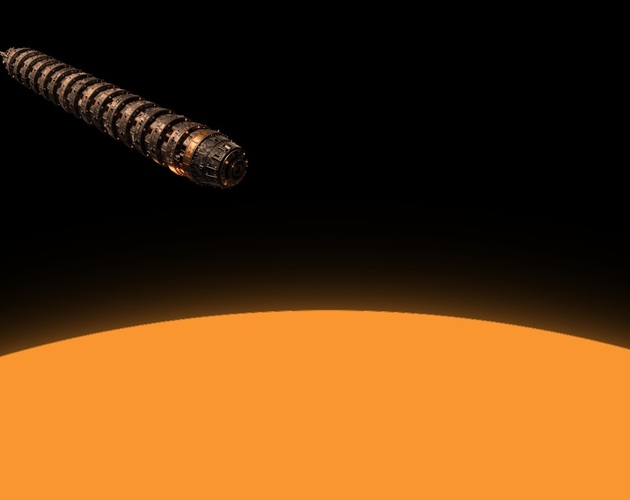
The ship has been dropping toward a star for eleven years. You wake in an alcove with no name, no memory, and hands that make gestures you did not ask them to make. Six decks lie between you and the core. You will not reach it the first time.
Each descent is ten to twenty minutes. You choose your route, roll two dice against thresholds you can always see before committing, and decide what to graft onto your body — every implant takes a slot, and the slots are few. When you die, you lose the body. You keep what you understood.
That is the whole loop: knowledge is the only thing that persists, and it is what opens the next chapter of the story. There are six chapters and eleven endings. Three of them explain what the Thésée actually is, and they only open once you know enough to bear it.
What makes it different
- Nothing is hidden from you. Every roll shows its threshold and its four possible outcomes before you commit. The difficulty is in the choosing, never in the guessing.
- Failing is content. Rupture outcomes carry text, knowledge and consequences you cannot reach any other way. The game is written to be lost.
- No grinding. Your body resets every run. The only permanent progression is understanding, and understanding is finite — twenty pieces of it, and you can see which ones you are missing.
- Everything is generated. No audio files: the soundtrack is synthesised live, including a five-voice choir built on Bulgarian diaphony — a held drone with the others rubbing against it in major seconds. It never loops, because there is no loop.
- One file. The whole game — text, images, sound — is a single HTML page. It runs offline, needs nothing installed, and saves in your browser.
Heads up
The game is in French. Every word of it, and the writing is the point — an English version is being worked on, but I would rather ship it late than ship it flattened.
It is a prototype. It is complete and it is balanced, but I am still listening: there is a “copy a playtest report” button on the end screen that puts your progress and four questions into your clipboard. Paste it in the comments. That is the entire feedback system, and it is the reason this page exists.
Leave a comment
Log in with itch.io to leave a comment.